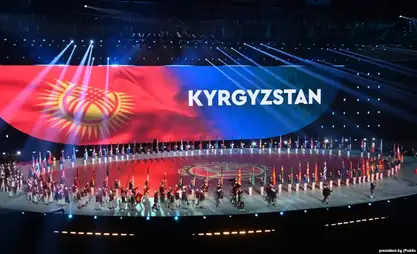
The simultaneous holding of 25th anniversary summit of the Shanghai Cooperation Organization (SCO) heads of state, the 6th World Nomad Games (WNG), and the celebration of Kyrgyzstan's 35th anniversary of independence will be the largest international event in the country's history. For the first time, Bishkek will simultaneously host more than 20 presidents, over 3,000 ethnic athletes from approximately 100 countries across all continents, and thousands of tourists. Thanks to WNG, the level of Kyrgyzstan will be widely demonstrated to the SCO member states and the world. The international significance of the ethno-tournament has already been recognized: WNG will be held under the auspices of UNESCO. Experts note, however, that the WNG potential extends far beyond sports and culture.
Analysts have repeatedly emphasized that the WNG are a project that opens up vast opportunities for Kyrgyzstan. Moreover, over the more than ten years of their existence, the Games have increased the number of countries and participants four to fivefold. The first Games in 2014 featured fewer than 600 athletes from 19 countries, and the program included just over ten sports. In 2026, more than 3,000 athletes from nearly 100 countries across all continents are expected to attend. Competitions will be held in a record 43 sports.
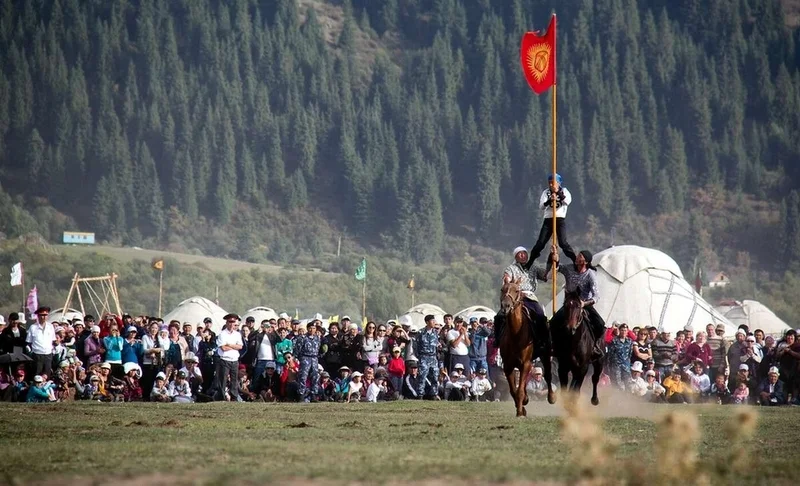
Thanks to the Games, Kyrgyzstan significantly expanded its cooperation with countries whose history is closely linked to nomadic civilization, including the states of Central Asia, as well as Iran, Pakistan, China, Afghanistan, Turkiye, Mongolia, and Russia. Countries from North and South America, the United States, Brazil, Argentina, and Peru have also joined the movement. Representatives from leading European economies, including France, Germany, and the Netherlands, as well as athletes from the United Arab Emirates, Nigeria, Indonesia, and India, are participating in the competition. Representatives from Australia are eager to participate.
Russia alone is sending a strong team of 230 athletes to the Games. The Committee of National and Non-Olympic Sports of Russia officially announced the approval of the national team roster for the 6th WNG.
"The Russian team will be one of the largest at WNG held in Kyrgyzstan. Our athletes will compete for medals in all 43 disciplines and showcase the unique diversity of our country's cultural heritage. The team's geography is impressive: representatives from 33 constituent entities of the Russian Federation will defend Russia's honor," the Russian Sports Committee reported.
As noted by the partner country, the WNG have become a platform for countries to present their national historical games and cultural identity to the world. It is safe to say that no similar international platform of this format exists today.
Several global and regional platforms exist worldwide aimed at developing ethnosports and preserving folk traditions. For example, the TAFISA World Games are somewhat similar to the Kyrgyz project. However, their difference is, they unite traditional games from different peoples of the world without emphasizing a specific cultural commonality. Indigenous peoples of the Americas, Maori, Australian Aborigines, and African tribes hold the World Indigenous Peoples Games. Northern peoples from Alaska, Greenland, Canada, and Scandinavia regularly gather for the Arctic Winter Games. Turkey organizes the International Ethnosport Festival, and Scotland hosts the renowned Highland Games.
In contrast, the WNG in Kyrgyzstan focus specifically on the culture of nomadic people and are unique in their scale, bringing together representatives from 90-100 countries. The international significance of this initiative has already been recognized and confirmed by UNESCO's announcement of patronage support for the 2026 Games.
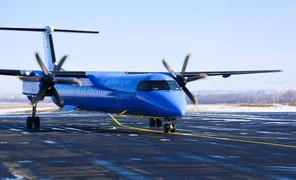
"This will create additional opportunities for expanding international participation and further promoting Kyrgyzstan's cultural heritage globally," the Kyrgyz Ministry of Foreign Affairs reported. High-ranking representatives of foreign governments, business circles, international organizations, and major investors arriving for the SCO summit and the WNG will primarily assess Kyrgyzstan's investment and entrepreneurial potential. The country has much to offer in this area. Kyrgyzstan is striving to maximize its geographic location, connecting Europe and Asia. Strategic projects are being implemented, including the construction of the China-Kyrgyzstan-Uzbekistan railway, the large energy facilities Kambarata-1 and Kulanak, logistics hubs, and terminals. The country is actively integrating into global trade routes. New ones have been opened. Air routes to Europe. Major investors, including from China, have announced their willingness to invest up to one billion dollars in solar and wind energy projects. In other words, Kyrgyzstan is demonstrating its ability to implement large-scale interregional strategic projects. At the same time, this demonstrates not only domestic stability but also the political stability of all of Central Asia, which is an important factor for major investors.
The potential of the WNG lies in becoming the largest global platform not only for nomadic civilization but also for global ethnosports, as well as an important tool of Kyrgyzstan's soft power. Tourism expert Maksat Chakiyev, one of the initiators of the Games shares his opinion:
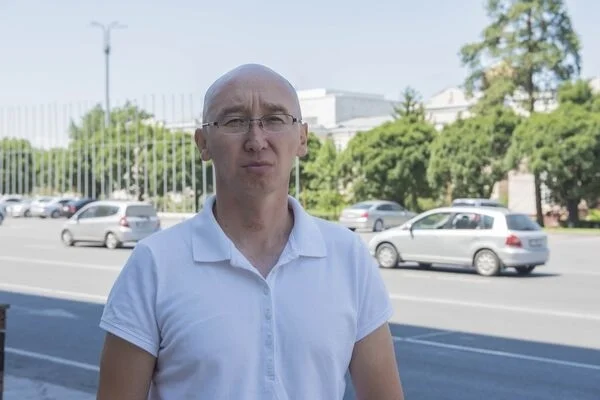
"The Olympic Games and world championships are soft power tools for European countries or major shareholders. Many countries seek to build relationships with the organizers of major international competitions, collaborate, and strengthen ties. This is why we created the WNG as a kind of ethno-Olympics, uniting national sports. For example, South Korea has not yet been able to elevate its national wrestling, sirimu, to the global stage. The WNG could become a platform for this, and the Korean side is prepared to invest significantly. The Games have the potential to become a soft power tool for Kyrgyzstan, promoting our economic interests, developing culture, tourism, and the creative economy. The creative economy allows us to develop and commercialize our crafts, cultural characteristics, and traditions. One example is the development of the ethnic fashion industry, with subsequent entry into Western markets and economic profits. "If the WNG are viewed not as a festival, but as a tool of soft power, they could become an integration project for the SCO member states and a center for the organization's sports development," noted tourism expert Maksat Chakiev.
International relations expert Bakyt Baketaev emphasized that developed countries traditionally hold leading positions at the Olympic Games and world championships, and sports only enhance their international capabilities. He believes that ethnosports have similar potential.
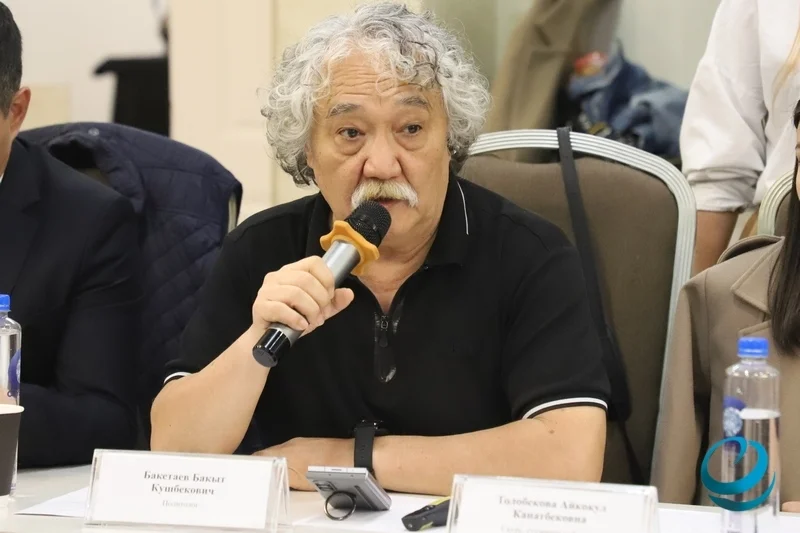
"The geography of the WNG and the number of peoples participating will continue to expand, as the project has enormous potential. Holding the Games simultaneously with the SCO summit was a very appropriate decision. The SCO, which unites such powers as China, Russia, and India, is known worldwide, as are all international political and financial institutions. Any international initiatives of this caliber are sure to yield results.
Take the World Cup. Until recently, few knew about Cape Verde. But after its footballers began defeating strong national teams, the world learned that the islands are ideal for diving and other water sports, and also possess a unique culture. "If the Olympic Games were born in Greece, then Kyrgyzstan is the birthplace of the WNG," said international relations expert Bakyt Baketaev.
In his opinion, the region is capable of breaking down externally imposed negative stereotypes and demonstrating its authentic history, the philosophy of nomadic civilization, and its modern identity. At the same time, he argues, Kyrgyzstan rightfully deserves its status as the guardian of nomadic civilization.
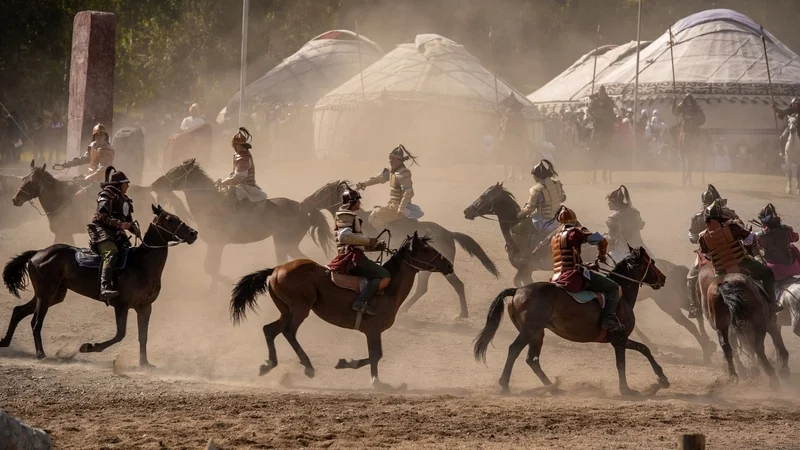
It's worth noting that regional disputes have arisen around the WNG over the years. In response, Kyrgyzstan initiated legislative protection for the Games' special status to ensure ownership of this international project.
Thus, the WNG are more than just a colorful celebration. They have become a symbol of Kyrgyzstan's ambitions, a platform for promoting the country's history, culture, and national values, uniting society, and achieving the state's strategic goals.