Poaching in Issyk-Kul has been reduced by 99%, and in the coming years, the region plans to completely resolve the garbage problem and conduct a large-scale study of the lake's ecosystem. Kylychbek Tentimishev, head of the Issyk-Kul regional administration of the Ministry of Natural Resources, Ecology, and Technical Supervision, spoke about the current environmental situation and future plans for preserving Issyk-Kul Lake in an exclusive interview with Kabar.
— Every year, fishing nets are recovered from the bottom of Issyk-Kul. What matters first: preventing illegal poachers or removing those nets that have been lying over the years?
— Presidential Decree No. 131 is currently in effect, clearly stating the need to clean up the lake and ensure its sustainable development. As part of this, a systematic campaign against poaching nets has been underway throughout the Issyk-Kul region for three to four years.
Last year, the Ministry of Natural Resources, Ecology, and Technical Supervision removed 47,000 meters of old fishing nets from the lake. In the first five months of this year, 30,000 meters of nets have already been removed. This year, we have intensified our efforts thanks to the arrival of new equipment and three new boats. The ministry currently has six or seven boats in operation.
Besides us, the Ministry of Emergency Situations, the environmental police, and the tourism police are also involved in net removal. Around 25 boats from various agencies are working on the lake at any given time. We've practically eliminated new nets. Poaching in Issyk-Kul has been virtually eradicated. Previously, illegal nets were set all over the lake, but now they're gone. We estimate that poaching has been reduced by 99%.
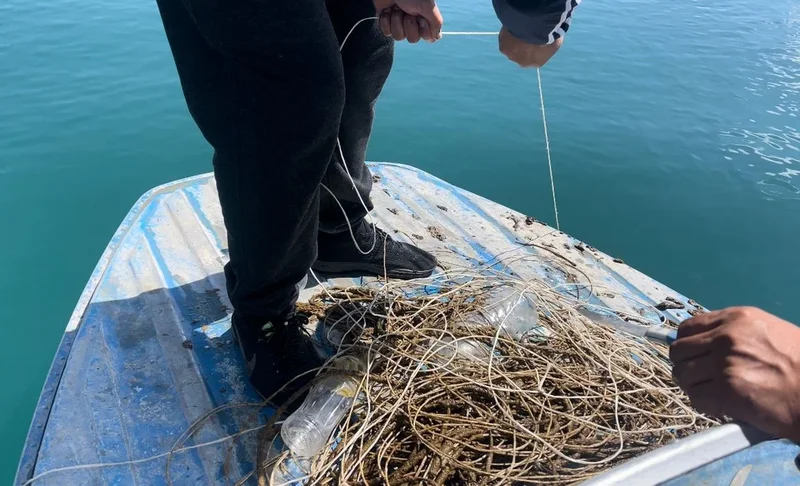
Residents started to understand that this isn't right. A fishing culture has emerged, the Kyrgyz Fishing Sports Federation was created, and even former poachers have begun helping to remove the nets themselves. The cleanup effort will continue on an ongoing basis.
— Is it possible to completely get rid old and illegal fishing nets, or is this a permanent task for environmental services?
— Of course, it is. We're working towards it. Technology is constantly evolving. We're already using underwater drones that descend to depths of 200 meters and detect fishing nets, after which relevant services will remove. We also have a map of the areas where cleanup is taking place.
However, the lake's peculiarity is such that during storms, nets that remain under a layer of silt can rise again and be washed ashore, where we collect them. Despite the work being done, old nets are still on the bottom. There will be no new nets, as the import of synthetic fishing nets into the republic is completely prohibited.
— In recent years, restrictions on the use of plastic bags have been implemented in the region. What do you think, have these measures actually covered the Issyk-Kul region, and can we talk about a complete transition to alternative packaging, or is plastic still used in certain segments?
— As of today, large retail chains and hypermarkets in the Issyk-Kul region have already banned the use of plastic bags and disposable plastic tableware. Smaller stores are gradually joining this trend.
At first, we conduct preventative measures, then we start practicing penalties. But the issue isn't just about punishment. We need to change people's minds so that everyone understands their responsibility for preserving nature.
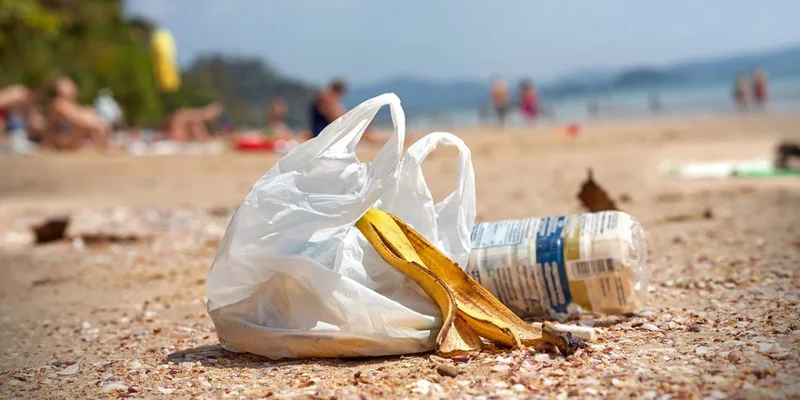
Alternatives, paper bags, fabric totes, and shoppers are available in the market. Unfortunately, we understand that polyethylene is cheaper and convenient for storing bulk goods for retail outlets. People are used to receiving these bags for free, but now they have to pay for a paper bag or shopper. Therefore, people need to be convinced, and this process is gradually underway.
However, plastic remains a major component of household waste. During inspections of landfills and waste collection facilities, we see that a significant portion of waste consists of plastic bags and plastic packaging.
However, starting in 2027, the distribution and sale of plastic bags throughout Kyrgyzstan will be completely banned, in accordance with Law No. 177. Accordingly, their import into the Issyk-Kul region will also be stopped. Customs posts will not allow plastic bags to pass through. Thus, the country will no longer use polyethylene, which has been damaging the environment.
— Which areas around Issyk-Kul remain most vulnerable to pollution today, despite the operation of treatment facilities?
—Issyk-Kul region currently bears the greatest burden, as it is the largest region receives the majority of tourists. Most of the tourist infrastructure is concentrated here.
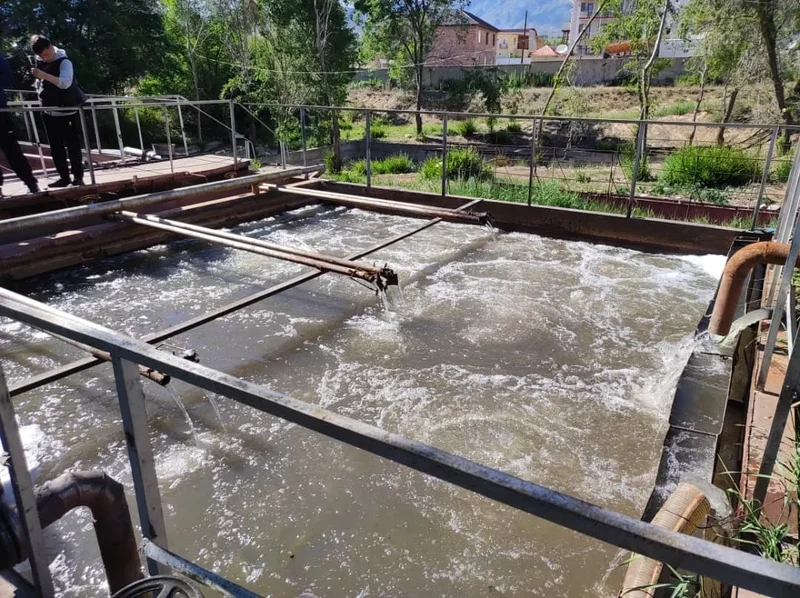
At the same time, tourism is also actively developing in other areas of the region. Guesthouses, resorts, and yurt camps are being built, and mountain tourism is developing. This contributes to economic development, but also requires adherence to strict environmental requirements.
— What are the main areas of further environmental measures planned for the region in the near future, and what will be the focus of strengthening monitoring?
— We will continue to combat poaching and clean up the lake of old nets. In addition, two waste plants are being built in Balykchy and Karakol with the participation of Chinese investors, similar to the facility in Bishkek. The Karakol plant is scheduled to begin accepting waste in late 2026 or early 2027. A waste recycling and sorting facility is also operating in Karakol. These two new waste plants will completely solve the waste problem in the Issyk-Kul region. They will also generate electricity.
Another important area is reducing the number of illegal dumps. Previously, there were approximately 88 landfills and dumps in the region. Currently, 11 landfills are officially operating, although the actual situation does not always correspond exactly to the statistics. However, we are aiming to have no more than ten large facilities in operation, which will make monitoring easier.
We also plan to conduct a global scientific study of the Issyk-Kul ecosystem. We are currently establishing a permanent research team. In the future, the Ministry of Natural Resources will establish hydrographic stations at Issyk-Kul Lake and the rivers flowing into it. These stations will measure precipitation, the biochemical composition of the water, and monitor the substances entering the lake.
In the Issyk-Kul region, the Ministry of Natural Resources will conduct a comprehensive series of activities aimed at studying forests, glaciers, and the impact of agriculture on the environment.